ThymoQuin® is a standardized, full-spectrum black seed oil ingredient made from Nigella sativa seeds. Its defined 3% thymoquinone specification and attention to oil quality offer a different proposition from products that compete on thymoquinone percentage alone. Importantly, ThymoQuin also has published product-specific human research exploring stress resilience, mood, and immune-related outcomes.4,5
- Black seed oil comes from Nigella sativa, not from the culinary spice cumin.
- Thymoquinone is an important bioactive compound—but it is not the entire oil.
- Standardization helps establish consistency across batches.
- Free fatty acid content is an important indicator of oil quality.
- In addition to broader Nigella sativa research, published studies have investigated ThymoQuin alone and black cumin seed oil in combination formulas.4,5,6,7
What if the highest number on the label isn't the most important one?
If you've ever compared black seed oil supplements, you've probably noticed how quickly the conversation turns to thymoquinone. One product advertises a particular percentage. Another promises even more.
The implied message is simple: more must be better.
But plants have a way of not cooperating with tidy marketing logic.
Black seed oil isn't a single molecule dissolved in a bottle. It's a complex botanical oil whose composition depends on the seed, growing conditions, processing, storage, and quality controls.
That makes better questions possible: What exactly are you getting? And, equally important, will you get the same thing next time?
Murray's central point was refreshingly practical: a black seed oil shouldn't be judged by one impressive number on a label. The seed, the extraction, the complete chemical profile, and the testing all contribute to the ingredient a consumer ultimately receives. It's a message that matters as much to supplement formulators as it does to the person standing in front of a store shelf.8
That distinction was at the heart of a conversation between naturopathic physician Dr. Michael T. Murray and Ben Greenfield on Ben Greenfield Life. Discussing ThymoQuin, Murray emphasized the relationship between thymoquinone, the broader spectrum of naturally occurring compounds, and the importance of producing a consistent ingredient.8
First, What Is Black Seed Oil?
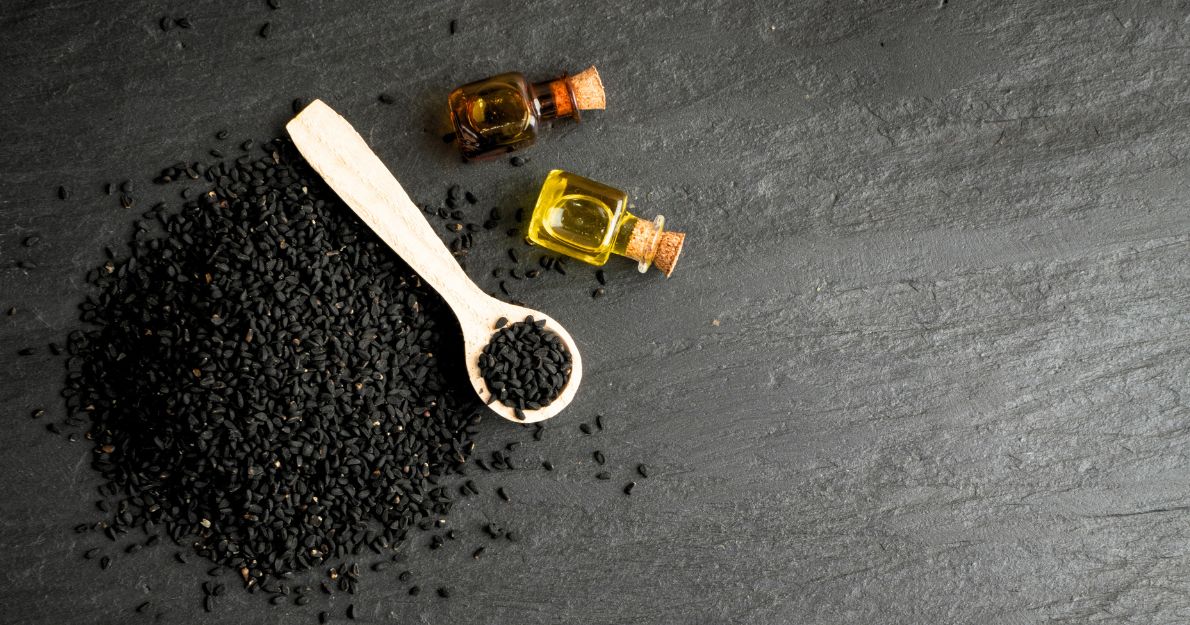
Black seed oil is pressed from the seeds of Nigella sativa, a flowering plant with a long history of use in traditional medicine. It is sometimes called black cumin seed oil, although Nigella sativa is botanically distinct from the cumin commonly used in cooking.
The oil contains fatty acids and a diverse collection of minor constituents. Among the most studied is thymoquinone, a quinone that has attracted attention in experimental research on cellular signaling, inflammation, and oxidative stress.
But thymoquinone is not synonymous with black seed oil. The intact botanical ingredient also contains other constituents, including related volatile compounds and phytochemicals.
That difference matters when reading research. A study using purified thymoquinone, one using whole seeds, and another using a particular cold-pressed oil are not automatically interchangeable. Their compositions, doses, and biological effects may—and probably will—differ.
Thymoquinone Matters. So Does the Rest of the Oil.
It's tempting to identify one "hero compound" and make it the entire story.
But botanical ingredients contain multiple compounds that act through different mechanisms. Researchers sometimes describe this possibility as phytochemical synergy: constituents may influence one another's behavior rather than acting as isolated ingredients.
Phytochemical Synergy
That does not mean every constituent has been proven to work synergistically in humans. It does mean that reducing a whole botanical oil to a single marker may overlook features of the original ingredient that researchers are still working to understand.
ThymoQuin's full-spectrum positioning is therefore best understood as a formulation and composition choice: the ingredient is a cold-pressed black seed oil intended to retain the naturally occurring matrix rather than supplying isolated thymoquinone alone. Whether that matrix produces a specific advantage for a given health outcome depends on appropriately designed comparative studies.
What Does 3% Standardization Actually Mean?
Standardization means setting and verifying a defined specification for a selected marker or constituent. For ThymoQuin, the specification discussed by Murray is 3% thymoquinone. In practical terms, that is a composition target—not a promise that every milligram of thymoquinone will have a particular effect in every person.8
Why is this useful?
Botanical materials vary. Soil, weather, seed genetics, harvesting, extraction, and storage can all affect composition. Analytical testing—often using high-performance liquid chromatography (HPLC)—helps determine whether an ingredient meets its stated specifications.
For supplement manufacturers, consistency is more than a technical nicety. It supports reproducible formulation, meaningful product specifications, and clearer comparisons between research batches and commercial production. A brand can't reliably connect a study to its finished product if the ingredient used in production is different from the one studied.
A higher thymoquinone percentage is not inherently a better product.
What matters is the intended formulation, the evidence for the particular preparation and dose, and the quality of the finished ingredient.
Why Free Fatty Acids Deserve Attention
Free fatty acids (FFAs) are fatty acids no longer bound within triglycerides. Their levels can rise as oils undergo hydrolysis during processing or storage (in consumer terms, turning "rancid"). That's why, for edible oils generally, free fatty acid measurements can help assess quality and handling. These damaged fatty acids are thought to decrease the effectiveness of the thymoquinone in the oil, so keeping free fatty acids low to begin with can be seen as a desirable goal for the manufacturer.
Murray highlighted ThymoQuin's specification of less than 2% free fatty acids. That is a potentially useful quality differentiator, particularly when paired with verified thymoquinone content and broader compositional testing.8
While not a clinical outcome by themselves, low free fatty acid levels are one useful quality marker. Their real value is in helping manufacturers assess how carefully an oil has been produced and maintained.
What Does the Human Research Actually Show?
The broader Nigella sativa literature includes numerous human trials, although preparations and doses vary. What makes the ThymoQuin story particularly interesting is that it does not rest solely on research into black seed oil as a general category. Published trials have also investigated this branded ingredient and related black cumin seed oil combinations in people.4,5,6,7
Metabolic and Cardiovascular Markers
A 2025 systematic review and meta-analysis covering 82 randomized trials and 5,026 participants reported improvements across several cardiometabolic risk markers, including blood pressure, glucose measures, lipid parameters, and some inflammatory markers. The authors characterized Nigella sativa as a promising adjunct, not a replacement for established treatment.1
A separate 2024 meta-analysis of 30 randomized trials found improvements in fasting blood glucose and HbA1c, while pooled effects on fasting insulin and HOMA-IR were not statistically significant. The investigators emphasized the need for stronger studies to clarify optimal dosing and duration.2
The important takeaway is that black seed oil has moved well beyond historical interest: it now has a meaningful body of human research examining metabolic and cardiovascular markers. Ingredient-specific trials can help clarify how a standardized preparation fits into that larger picture.
Inflammation and Oxidative Stress
Experimental research suggests that thymoquinone may influence signaling pathways involved in inflammation and cellular antioxidant responses, including NF-κB and Nrf2. Those mechanisms are biologically plausible, but mechanistic activity is not the same as a demonstrated clinical benefit.
Clinical findings are mixed. A 2020 meta-analysis of 50 trials found favorable changes in several lipid and glucose markers, but its pooled results for C-reactive protein and certain other inflammatory or oxidative-stress measures were not statistically significant.3 A later, broader 2025 review reported improvements in CRP and hs-CRP among its pooled outcomes.1 The responsible conclusion is that the evidence is evolving, not that inflammation reduction is guaranteed.
Stress, Cortisol, and the Gut Microbiome
Stress resilience may be the most compelling place to connect the science with Murray's conversation on Ben Greenfield Life. Cortisol is not a villain; it is a necessary hormone that helps us respond to challenges. The question is how well the body adapts when demands continue, and whether an intervention can support the broader experience of stress, energy, mood, and sleep.8
In an eight-week randomized, placebo-controlled study published in 2026, Shawn and Julie Talbott evaluated a proprietary, patented black seed oil in moderately stressed, otherwise healthy adults. The investigators examined endocrine stress markers, sleep quality, and subjective vitality. Their report describes favorable changes across aspects of stress resilience. This is a meaningful addition to the ThymoQuin discussion because the intervention was a proprietary black seed oil—not simply an isolated thymoquinone compound.4
Earlier research explored a different real-world stressor: endurance competition. In a 2022 randomized, double-blind, placebo-controlled study, 37 marathon and half-marathon runners received 500 mg daily of ThymoQuin (3% thymoquinone) or placebo for four weeks. The investigators assessed upper-respiratory tract complaints and psychological mood state during the training-and-competition period. The study provides a second product-specific line of investigation into how black seed oil may support people facing substantial physical demands.5
Two related 2022 studies investigated black cumin seed oil as part of combination formulas. One trial followed 35 runners taking 500 mg black cumin seed oil plus 1,500 mg fish oil daily for four weeks. The researchers collected mood and upper-respiratory complaint measures, along with salivary cortisol and fecal microbiome samples. Compared with placebo, the combination group reported fewer respiratory complaints and better well-being, with lower cortisol and more favorable microbiome indices.6
In another four-week trial, 32 runners received 500 mg black cumin seed oil plus 8 mg astaxanthin or placebo. Investigators again assessed respiratory complaints, mood, cortisol, and microbiome indices. The authors reported favorable findings for the combination across these measures.7 These two trials offer an intriguing picture of the gut–immune–brain connection Murray discussed, although they cannot tell us which portion of the benefit came from black seed oil versus the companion ingredient.
Together, these studies suggest a useful progression: from a defined black seed oil ingredient, to human studies of stress and mood, to exploratory work on how botanical and marine-oil combinations may affect connected physiological systems. The results are promising, not a claim that every black seed oil or every formulation will produce the same outcome.
Why the ThymoQuin Story Is Different
The ThymoQuin approach starts with a deceptively simple proposition: preserve the complexity of the original oil while controlling the variables that manufacturers need to control. Murray described selectively bred Nigella sativa seeds, cold pressing, and analytical verification. Published human studies using the proprietary ingredient Murray was referring to give that manufacturing story a clinical dimension beyond compositional specifications alone.4,5,8
That combination is particularly relevant in a category where two bottles may both say "black seed oil" but contain materials with very different chemical profiles. Standardization doesn't erase the botanical's complexity; ideally, it makes that complexity more dependable from one batch to the next.
ThymoQuin®
And that's the real distinction: ThymoQuin is not being presented as isolated thymoquinone with a black seed label attached. It is positioned as a characterized, full-spectrum oil with measurable specifications and a growing body of ingredient-focused research.
How Should Manufacturers Evaluate a Black Seed Oil Ingredient?
For formulators, the most useful question is not simply "How much thymoquinone?"
It's "How completely can this supplier characterize, reproduce, and substantiate the ingredient?"
A serious evaluation should include botanical identity, sourcing, extraction method, quantitative thymoquinone testing, relevant quality indicators such as free fatty acids, contaminant testing, batch-to-batch consistency, stability, and the extent to which published studies actually used the ingredient being sold.
ThymoQuin's stated 3% thymoquinone standardization and low-FFA specification provide a clear starting point for that conversation. The broader value proposition is an identifiable, full-spectrum botanical oil with defined manufacturing targets. Those are meaningful attributes even before anyone makes a health claim.
The Bottom Line: Better Questions Make Better Black Seed Oil Choices
Black seed oil has earned scientific attention for reasons that go beyond its long traditional history. But the most useful lesson from Murray's conversation with Greenfield may be a practical one: don't reduce a complex botanical ingredient to a single impressive number.8
Look for clear identity, thoughtful processing, verified standardization, sensible quality specifications, and clinical evidence that matches the actual preparation.
ThymoQuin's approach places those considerations at the center of its story—and gives manufacturers and informed consumers a more useful framework for evaluating black seed oil.
The information in this article is intended for educational purposes only and should not be considered medical advice. Dietary supplements are not intended to diagnose, treat, cure, or prevent any disease. Always consult a qualified healthcare professional before beginning any new dietary supplement, especially if you are pregnant, nursing, taking medications, or have a medical condition.
