

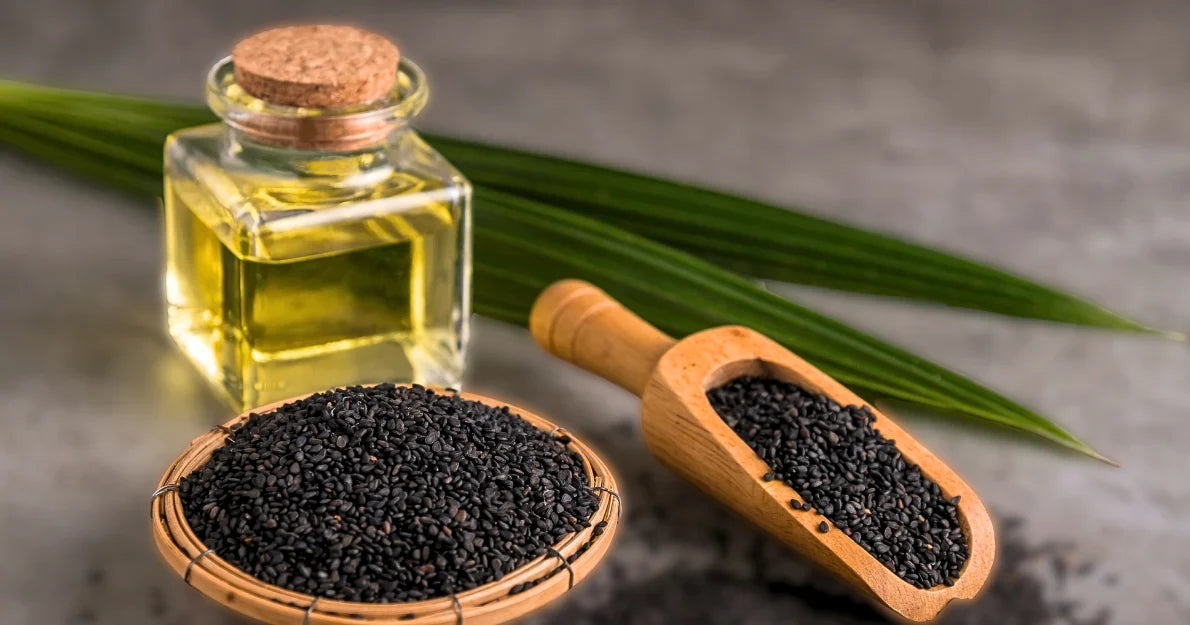
When scientists set out to understand why black seed oil has been used for centuries—and why it continues to attract so much scientific interest—they kept coming back to one remarkable naturally occurring compound: thymoquinone.1,3
Black seed oil contains dozens of naturally occurring plant compounds, but none has received more scientific attention than thymoquinone (TQ). Identified as the oil's principal bioactive compound, thymoquinone has been extensively studied for its antioxidant activity and its potential role in supporting immune function, maintaining a healthy inflammatory balance, promoting metabolic health, and supporting the body's natural antioxidant defenses. While researchers continue to explore its full range of biological activities, thymoquinone has become the centerpiece of modern black seed oil research and one of the primary reasons Nigella sativa has earned such a prominent place in nutritional science.1,3
- Thymoquinone (TQ) is the principal bioactive compound found in black seed oil.3
- It occurs naturally in the seeds of Nigella sativa, commonly known as black seed or black cumin.1
- Researchers have extensively studied thymoquinone for its antioxidant activity and its potential role in supporting immune health, maintaining a healthy inflammatory balance, metabolic function, and cellular health.3
- Much of today's scientific research on black seed oil focuses on understanding how thymoquinone interacts with the body's natural biological pathways.1,3
- Because thymoquinone levels can vary considerably among black seed oil products, standardized supplements are often preferred in both clinical research and premium formulations.3,8
- Interest in thymoquinone continues to grow as researchers investigate its potential role in healthy aging and overall wellness.1,2
What Is Thymoquinone?
Thymoquinone may not be a household name, but it has become one of the most intensely studied naturally occurring compounds in nutritional science. Found primarily in the volatile oil of Nigella sativa seeds, thymoquinone is considered the principal bioactive compound responsible for much of the scientific interest surrounding black seed oil.1,3
Plants produce thousands of naturally occurring compounds known as phytochemicals. These compounds help plants survive by protecting them against environmental stressors such as ultraviolet radiation, insects, fungi, and other threats. Interestingly, many of these same phytochemicals also interact with biological pathways in the human body, which is one reason botanicals have attracted scientific interest for decades.1
Among the many naturally occurring compounds found in black seed oil, thymoquinone stands out because it has demonstrated a broad range of biological activities in laboratory studies and has increasingly become the focus of human clinical research. Rather than acting on a single target, researchers have found that thymoquinone appears to influence multiple cellular signaling pathways involved in antioxidant defenses, immune regulation, healthy inflammatory balance, and metabolic function.3
Multi-Target Phytochemical
This ability to interact with multiple biological systems is one reason scientists often describe thymoquinone as a multi-target phytochemical. Unlike many pharmaceutical drugs, which are designed to affect a single biological pathway, naturally occurring compounds frequently work by influencing several interconnected systems simultaneously. That complexity is one reason nutritional science can be both fascinating—and challenging.3
Of course, it's important to distinguish between laboratory findings and proven clinical benefits. Much of what researchers know about thymoquinone's biological activity comes from cell culture and animal studies, while human clinical research is still evolving. Even so, the growing body of evidence has established thymoquinone as one of the most promising and extensively investigated compounds found in black seed oil.1,2,3
How Does Thymoquinone Work?
One of the reasons scientists find thymoquinone so intriguing is that it doesn't appear to work through just one biological pathway. Instead, research suggests that it interacts with several interconnected systems involved in maintaining normal cellular function. This multi-target activity helps explain why thymoquinone has been studied in such a wide variety of health applications.3
Supporting the Body's Natural Antioxidant Defenses
Every day, the body's cells are exposed to oxidative stress, a normal consequence of metabolism, physical activity, environmental exposures, and even the aging process. Oxidative stress occurs when unstable molecules known as free radicals outnumber the body's ability to neutralize them with antioxidants.
Thymoquinone has attracted considerable scientific interest because of its antioxidant activity. Laboratory and animal studies suggest that it may help support the body's natural antioxidant defense systems while protecting cells from oxidative stress. Human research is still evolving, but these findings have helped establish thymoquinone as one of the most important antioxidant phytochemicals found in black seed oil.3
Helping Maintain a Healthy Inflammatory Balance
Inflammation is often portrayed as something inherently harmful, but that's an oversimplification. A healthy inflammatory response is essential for normal healing, immune function, and recovery from injury or infection. The goal isn't to eliminate inflammation—it's to maintain an appropriate balance.
Researchers have found that thymoquinone interacts with several of the body's normal cell-signaling pathways involved in regulating healthy inflammatory responses. While scientists continue to investigate these mechanisms, this area remains one of the most active fields of thymoquinone research.3
Supporting Healthy Cellular Communication
Our bodies function because billions of cells are constantly communicating with one another. They send and receive chemical messages that help regulate everything from energy production and immune activity to tissue repair and metabolism.
Scientists have discovered that thymoquinone appears to influence several of these normal communication networks, often referred to as cell-signaling pathways. Rather than forcing the body in one direction, researchers believe thymoquinone may help support the normal regulation of these complex biological systems—a concept that continues to be explored in both laboratory and clinical research.3
As scientists continue to study these mechanisms, one theme has become increasingly clear: thymoquinone's biological activity appears to extend well beyond any single organ or body system. That may help explain why researchers have investigated it in connection with such a broad range of health outcomes—from immune and metabolic health to healthy aging and physical resilience.1,3
The next question, of course, is whether those biological mechanisms translate into measurable benefits in people.
That's where human clinical research becomes especially important.2
What Does the Research Say About Thymoquinone?
Because thymoquinone influences multiple biological pathways, researchers have investigated its potential role in a wide variety of areas related to human health. While laboratory and animal studies have provided important insights into its mechanisms of action, human clinical research is especially valuable because it helps determine whether those findings translate into meaningful real-world outcomes.1,2,3
Although research is ongoing, several areas have emerged as the primary focus of human studies.
Immune Health
A healthy immune system depends on balance. Rather than simply becoming more active, the immune system must respond appropriately to challenges while avoiding unnecessary or prolonged activation.
Human and laboratory research suggest that thymoquinone may help support normal immune function by influencing several biological pathways involved in the body's natural defense systems. Scientists continue to investigate exactly how these effects occur, but the available evidence has made immune health one of the most active areas of thymoquinone research.2,3
Healthy Inflammatory Balance
Maintaining a healthy inflammatory balance is essential for overall wellness. Researchers have long been interested in thymoquinone because of its apparent ability to interact with several of the body's normal inflammatory signaling pathways.
While much of the mechanistic research has been conducted in laboratory settings, human studies continue to explore whether these biological effects may help support healthy inflammatory balance as part of an overall wellness strategy.2,3
Metabolic Health
Perhaps one of the most exciting areas of current research involves metabolic health.
Clinical studies have investigated standardized black seed oil preparations rich in thymoquinone for their potential effects on measures such as blood glucose regulation, insulin sensitivity, blood lipids, and other markers associated with cardiometabolic health. While individual study results vary, several systematic reviews suggest that black seed oil supplementation may provide meaningful support when combined with healthy lifestyle habits.2,5
As scientists continue to better understand metabolic dysfunction, interest in naturally occurring compounds that support healthy metabolic function has grown substantially. Thymoquinone remains one of the most promising candidates in this field of research.3,5
Physical Resilience and Healthy Stress Response
More recently, researchers have begun exploring thymoquinone's potential role in helping the body adapt to periods of physical stress.
In one human clinical trial, participants who received a standardized black seed oil extract rich in thymoquinone maintained healthier cortisol levels following prolonged endurance exercise compared with those receiving a placebo. Researchers also observed favorable changes in several measures associated with recovery and resilience.4
While additional research is needed, studies like these illustrate an important point: scientists are no longer studying thymoquinone only in laboratory models. Increasingly, they're asking practical questions about how standardized black seed oil ingredients may support human health under real-world conditions.2,4
As the evidence continues to grow, researchers have also learned something equally important: the quality of the black seed oil matters. If thymoquinone is the compound being studied, then it makes sense that researchers want to know exactly how much of it participants are receiving.
That has led directly to one of the most important developments in modern black seed oil research: standardization.
Why Does Standardization Matter?
If thymoquinone is the compound researchers are studying, one obvious question follows:
How much thymoquinone is actually in a black seed oil supplement?
The answer may surprise you.
Not all black seed oil products contain the same amount of thymoquinone. In fact, the concentration can vary considerably depending on factors such as the variety of Nigella sativa used, growing conditions, harvesting methods, extraction techniques, storage conditions, and manufacturing processes. Two bottles labeled "black seed oil" may look nearly identical on the shelf while containing very different amounts of the compound that has attracted so much scientific interest.1,3
That's where standardization becomes important.
A standardized black seed oil ingredient is manufactured to consistently deliver a specified amount of thymoquinone from batch to batch. Instead of relying on the natural variability found in many botanical products, standardization helps ensure that researchers—and ultimately consumers—know what they're getting every time.8
This consistency is especially important in clinical research. If scientists want to determine whether thymoquinone contributes to a particular biological effect, they first need confidence that every participant is receiving essentially the same amount of thymoquinone throughout the study. Without that consistency, it becomes much more difficult to interpret the results or compare one study with another.3,8
Standardization also plays an important role in product quality. A premium standardized ingredient is manufactured under carefully controlled conditions and routinely tested to verify its identity, purity, and potency. These quality measures help ensure that the finished product consistently meets the specifications established by the manufacturer.8
ThymoQuin®
One example is ThymoQuin®, a premium black seed oil ingredient developed to provide consistently high levels of thymoquinone while minimizing free fatty acids that may affect stability and product quality. ThymoQuin also became the first black seed oil ingredient to receive a United States Pharmacopeia (USP) quality monograph, an important milestone that reflects rigorous standards for identity, purity, and manufacturing quality.8
For consumers, the takeaway is simple.
When choosing a black seed oil supplement, it's worth looking beyond the name on the label. Understanding how a product is sourced, manufactured, and standardized may be just as important as knowing that it contains black seed oil in the first place.
Choosing a Thymoquinone Supplement: What to Look For
If you've decided to add a black seed oil supplement to your wellness routine, you'll quickly discover that there are dozens of products on the market. While they may appear similar at first glance, the quality—and the amount of thymoquinone they provide—can vary considerably.
So what should you look for?
Standardization
As we've discussed, one of the most important considerations is whether the product is standardized to provide a consistent amount of thymoquinone. Standardization helps ensure that each batch delivers the same level of the compound that has been the focus of so much scientific research.3,8
Quality Manufacturing
Look for products manufactured under recognized quality standards with careful testing for identity, purity, and potency. High manufacturing standards help ensure that what's listed on the label is actually what's in the bottle.8
Transparency
Reputable manufacturers are transparent about their ingredients, manufacturing processes, and quality controls. They provide clear information about the source of their black seed oil and the characteristics that distinguish their product from less standardized alternatives.
Evidence-Based Formulations
Perhaps most importantly, choose products that are supported by scientific research rather than marketing hype. As interest in black seed oil continues to grow, it's easy to be distracted by dramatic claims or exaggerated promises. Products backed by standardized ingredients and human clinical research provide a much stronger foundation for making informed decisions.2,4,8
Ultimately, choosing a high-quality supplement isn't about finding the product with the longest list of claims. It's about selecting one that reflects the same commitment to consistency, quality, and scientific integrity that researchers rely on when studying thymoquinone itself.
The Bottom Line
Thymoquinone is much more than just another plant compound. It is the principal bioactive constituent of black seed oil and the reason Nigella sativa has become one of the most extensively researched botanicals in nutritional science.1,3
Over the past several decades, researchers have investigated thymoquinone's role in supporting immune health, maintaining a healthy inflammatory balance, promoting metabolic health, supporting the body's natural antioxidant defenses, and contributing to overall wellness. While many questions remain, the growing body of laboratory and human clinical research continues to deepen our understanding of how this remarkable phytochemical interacts with the body's complex biological systems.1,2,3
Perhaps one of the most important lessons from this research is that quality matters. As scientists increasingly focus on thymoquinone, the importance of standardized, carefully manufactured black seed oil ingredients has become impossible to ignore. Consistency, purity, and reliable levels of thymoquinone aren't simply manufacturing goals—they're essential to producing meaningful scientific research and high-quality nutritional products.3,8
The story of thymoquinone is still unfolding. As new discoveries continue to emerge, this naturally occurring phytochemical remains an outstanding example of how traditional botanical knowledge and modern scientific investigation can come together to advance our understanding of human health.1,2
The information in this article is intended for educational purposes only and should not be considered medical advice. Dietary supplements are not intended to diagnose, treat, cure, or prevent any disease. Always consult a qualified healthcare professional before beginning any new dietary supplement, especially if you are pregnant, nursing, taking medications, or have a medical condition.
